 Choice
WhatsApp for business: app or API, message pricing, and when you need a bot
WhatsApp Business app vs. API in Armenia: the differences, Meta's fees from October 1, 2026, when a bot pays off, and what I charge for building one.
Cookies on this site
The site stores what it needs itself: your theme, your animation setting and this choice. Analytics, marketing and external services switch on only with your consent. You can change your mind at any time. More about cookies
Choice
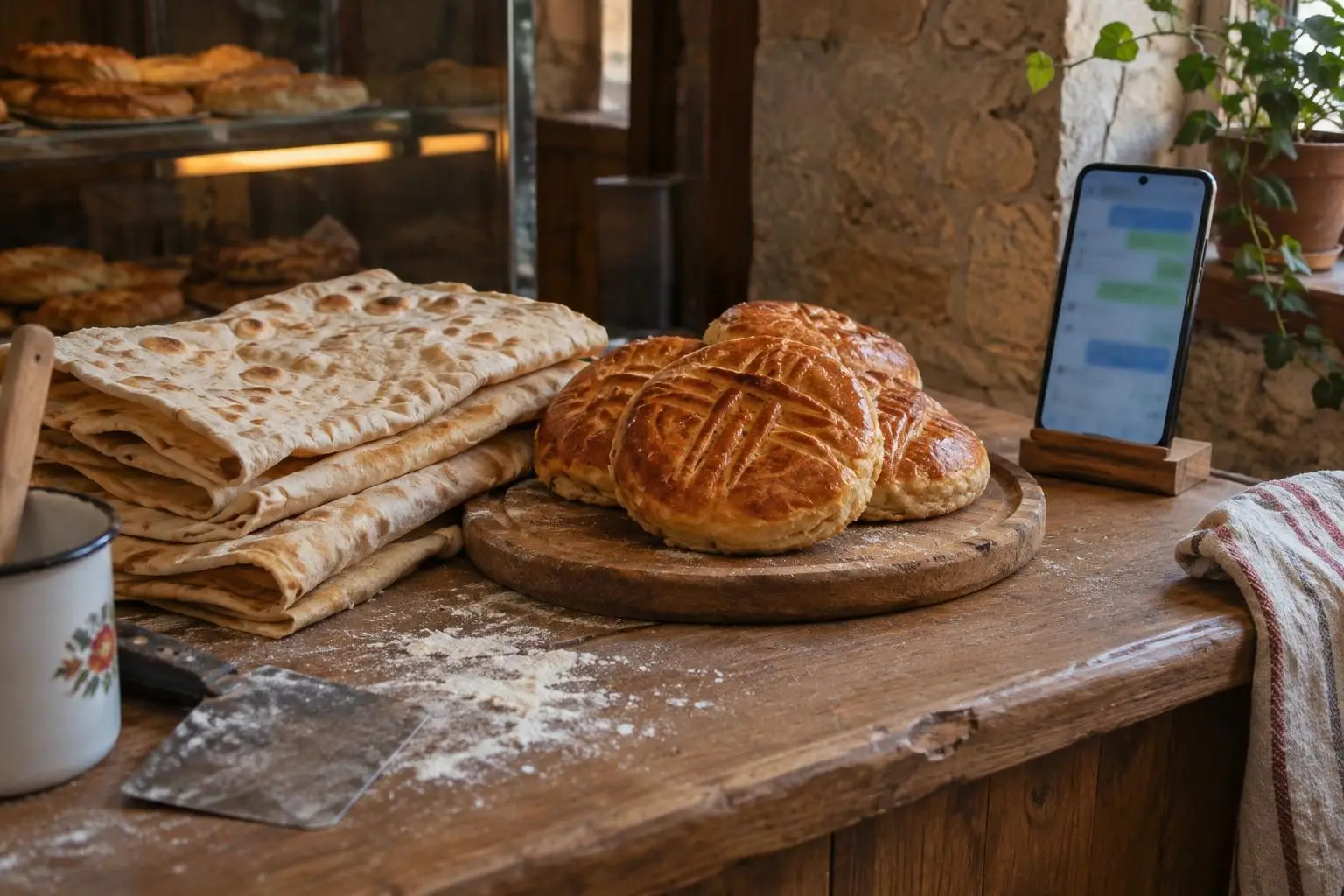
A Telegram bot handles an order or booking simply: it shows buttons, asks for a name, phone number, date, and item, then sends the finished request to you. A basic request bot starts at 130,000 ֏ with me, and I run a 1–2 week assessment before starting. It doesn’t replace a website if you need Google search visibility and a page you can show to a bank.
Take a small flower shop as an example. A customer opens the bot through an Instagram link and taps “Order a bouquet.” The bot asks them to pick a language, displays three or four items with prices, asks for the delivery address and time, and requests a phone number. Once the last answer comes in, the order goes to the owner in Telegram, and the customer gets an “Order confirmed” message.
This is an example, not an actual client project. The point is that the bot guides the user through predetermined steps, and every step can be verified. If you need a bot that answers open-ended questions, that’s a different setup involving AI, and I covered the Armenian language side of that in my article on an AI chatbot in Armenian.
| Task | Bot | Human |
|---|---|---|
| Collect a request step by step | Asks questions, verifies the phone number looks valid | Confirms the order |
| Show prices and hours | Answers from a prepared list | Updates the list when prices change |
| Book a time slot | Shows available slots if they are in the spreadsheet | Maintains the spreadsheet or calendar |
| Remind the customer | Sends a Telegram message on the scheduled day | Decides what to write |
| Custom question | Hands the conversation over to you | Answers directly |
A bot works well when questions and steps repeat. When every customer brings a unique story, the bot only collects their contact info, and you take over the conversation from there.
A bot lives inside Telegram: it has no standard web page that search engines can index or that you can submit to a bank. Your choice depends on how clients find you.
| Situation | What fits best |
|---|---|
| Clients message you on Instagram and Telegram, and you’re drowning in chats | A bot on top of the messenger, website later |
| Clients look for you on Google | A website, with a bot as an extra button |
| You need to accept Visa, Mastercard, and ArCa cards | A website with an acquiring agreement from a bank |
| Clients only need to book an appointment and nothing else | A bot |
If you’re deciding between messaging apps, my article on WhatsApp, Viber, and Telegram covers where to direct people. Here the question is different: what to do with a client once they’ve already messaged you.
According to Telegram’s Bot API documentation, Telegram doesn’t process payments itself: the bot issues an invoice, and the customer pays through a third-party provider that you connect via BotFather. Telegram charges no fee. The currency table on that same documentation page lists the Armenian dram (AMD), with a minimum invoice amount of around 390 drams, though the table fluctuates with exchange rates.
What the page lacks is a list of payment providers that actually work with Armenian companies and accept drams. Because of that, I only set up in-bot payments after a provider confirms in writing that they support your company and AMD. Until then, simpler options work better: a link to a bank or wallet payment page on your website, a direct bank transfer, or paying the courier. For details on payment methods in Armenia, see website payments.
Yes, mostly around broadcasts. Telegram’s bot documentation states that a bot can send about 30 messages per second without paid broadcasts, no more than 20 messages per minute to a single group, and it’s best not to send more than one message per second to an individual chat. Exceeding limits triggers an HTTP 429 error. Telegram charges nothing to use a bot within standard limits.
These numbers are plenty for orders and bookings. The limits only matter to those broadcasting to thousands of people at once. According to the same docs, paid broadcasts with a limit of 1,000 messages per second require at least 100,000 Stars on balance and 100,000 monthly active users, making them impractical for a small business.
We pick the language before starting. The simplest setup for Armenia is a first button offering “Հայերեն / Русский / English”, with all subsequent texts in the chosen language. Each language means a separate copy deck that I test against real questions from your clients. Product names and prices have to be written out for each language individually, and if you have many products, that copy is the bulk of the work, not the code.
A simple bot or basic automation starts at 130,000 ֏. Work begins with a 1–2 week assessment: we look at what process to automate and document the steps in writing. Next comes a test build using your actual data. Once finished, you receive login credentials and documentation explaining how the bot works. More complex tasks, such as syncing with an inventory spreadsheet or a CRM, are quoted after the assessment. I don’t make upfront promises about how many orders a bot will generate or how much time it will save.
If your customers message you on WhatsApp rather than Telegram, see WhatsApp for business.
I build AI automations and bots for pay, and not everyone needs one. If you only get five requests a day, a “Message on Telegram” button on your website is enough. Tell me how you currently take orders and your daily volume, and I’ll tell you whether a bot will pay off.
Routine work goes to software: reports and data move on their own, and an AI assistant answers common questions.
Choice WhatsApp Business app vs. API in Armenia: the differences, Meta's fees from October 1, 2026, when a bot pays off, and what I charge for building one.
 Choice
How AI chatbots handle Armenian: 2026 benchmark results, dealing with Latin-script Armenian, and how to test a bot on your own customer questions before launch.
 Choice
Hotel website in Armenia: how much OTAs and banks take from a 100,000 ֏ booking, when a direct site pays off, and bank requirements for payment pages.
Talk to us
Phone us, write to us or send a short brief. You get a clear next step and, after the first conversation, a written estimate.
Animation is off because your system asks for reduced motion.