 Payments
E-cash registers for online stores in Armenia from 2027: what we know
Law ՀՕ-309-Ն introduces e-cash registers from January 1, 2027, with a 500 000 ֏ fine. The government will decide on online stores in December 2026.
Cookies on this site
The site stores what it needs itself: your theme, your animation setting and this choice. Analytics, marketing and external services switch on only with your consent. You can change your mind at any time. More about cookies

Anyone looking to run an online store in Armenia has three options: sell through Instagram, use Shopify, or build a custom site. Everyone runs into the same question: how do you accept payments? Shopify Payments isn’t available in Armenia because the country isn’t on the supported list. ArCa cards and the Idram wallet connect through separate apps built by a third-party developer, and their pricing isn’t publicly listed.
| Option | Payment method | Confirmed facts |
|---|---|---|
| Instagram and DMs | Direct transfers, cash on delivery, payment links | No actual storefront: all orders are handled manually |
| Shopify | Third-party developer apps | No Shopify Payments for Armenia, but ArCa and Idram apps exist |
| Custom website | Direct contract with a bank, digital wallets on request | Bank terms and fee schedules are publicly available |
If taking orders through Instagram works for you right now, you don’t necessarily need a website. I covered when a site actually becomes necessary in my article on websites vs. Instagram. Here, I compare platforms for those who’ve already decided they need a store.
Shopify Payments, the platform’s native payment system, operates in 39 countries. Armenia isn’t on the support page’s list. That same documentation states that if your country isn’t listed, you must use a third-party payment provider.
In the Shopify App Store, I found two relevant apps. The idram Checkout app accepts Idram payments in AMD, while the ArCa app accepts cards through Armenian banks that support 3D Secure. Both list the same developer: Nabeyond Ltd, London. Their listings state that installation is free, but they charge a minimum fee plus a percentage on each successful transaction, billed in USD. The exact rates aren’t listed. The Idram app had zero reviews in the store when I checked. Both state they’re only compatible with eligible stores, without explaining on the page what those eligibility requirements are.
Telcell isn’t mentioned in the descriptions of either app. If you specifically need Telcell, reach out to Telcell Business to ask how to integrate it with Shopify.
For a custom website, the terms are published. Under Ameriabank’s internet acquiring terms (edition 9), the transaction fee is 1.5% for ArCa and 2.7% for Visa and Mastercard. The bank provides integration credentials within 10 business days after signing the contract and settles payouts within 5 business days after authorization.
| Monthly turnover | 1.5% (ArCa) | 2.7% (Visa, Mastercard) |
|---|---|---|
| 500,000 ֏ | 7,500 ֏ | 13,500 ֏ |
| 2,000,000 ֏ | 30,000 ֏ | 54,000 ֏ |
That’s the basic math using bank rates. To compare that with Shopify apps, you need their actual rates, which aren’t public: ask the app developer before installing. I didn’t verify Shopify’s subscription pricing for the store itself; check their pricing page directly.
I covered who banks will approve for card payments and what stores aren’t allowed to sell in the article on accepting payments online in Armenia. The basic rule is straightforward: the bank only works with registered companies or sole proprietors, not individuals.
If you only get a few orders a week, start with Instagram and direct transfers. How much the other two routes cost depends on your numbers, and I won’t guess. My rule is simple: a dedicated online store makes sense once customer DMs eat up more time than you want to spend, or when you can’t accept card payments without one.
For an annual cost breakdown that includes recurring expenses like domain registration and bank fees, see how much an online store costs in Armenia.
I build custom online stores starting at 500,000 ֏, with a timeline of 6 to 12 weeks. The price includes the catalog, cart, checkout, payment and shipping setup, product import, and initial content. Once paid in full, all code and credentials belong to you, and the domain and hosting are registered directly in your name.
Shopify builds a store using an off-the-shelf site builder, which is faster than coding from scratch. In Armenia, though, payments depend on an app from a single London-based company, and they set the terms: you have to ask them directly about fees and minimum charges. With a custom site, you deal with the bank directly and see their published rates upfront. Which option ends up cheaper depends on your sales volume, and without your numbers, I can’t calculate that for you.
You can set up three languages (Armenian, Russian, English) on either platform. How to configure them so Google indexes each version properly is something I covered in my article on building a website in three languages.
Before making a decision, ask both the app developer and the bank four questions: what the processing fee is, when funds hit your account, how disputed payments are handled, and whether you can cancel without penalties. Also ask how long onboarding takes and how refunds work.
Building online stores in Armenia (website and online store development) is my work, and it’s how I make a living. But if you’re just testing demand, Instagram or a site builder is cheaper. Send me what you sell and how many orders you get a month, and I’ll tell you which option fits.
Websites, online stores and landing pages in three languages, so visitors understand your offer and get in touch.
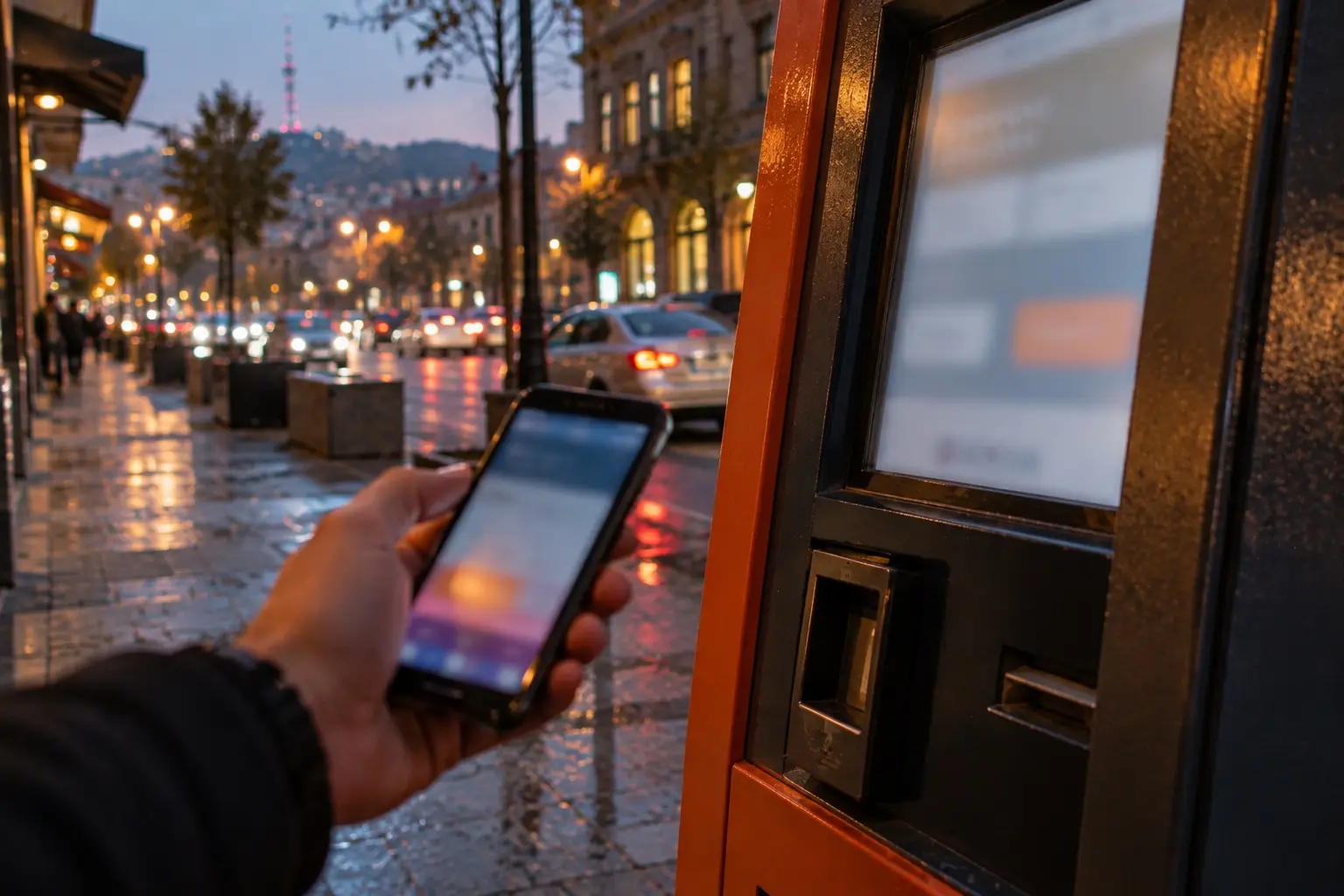
Payments Law ՀՕ-309-Ն introduces e-cash registers from January 1, 2027, with a 500 000 ֏ fine. The government will decide on online stores in December 2026.
 Payments
How customers pay with Idram and Telcell, how to apply, and unconfirmed details like fees, limits, and timelines. Compared with bank card processing.
 Payments
How to set up online payments in Armenia: acquiring banks, 1.5% and 2.7% fees, setup credentials in 10 banking days, plus Idram and Telcell wallets.
Talk to us
Phone us, write to us or send a short brief. You get a clear next step and, after the first conversation, a written estimate.
Animation is off because your system asks for reduced motion.